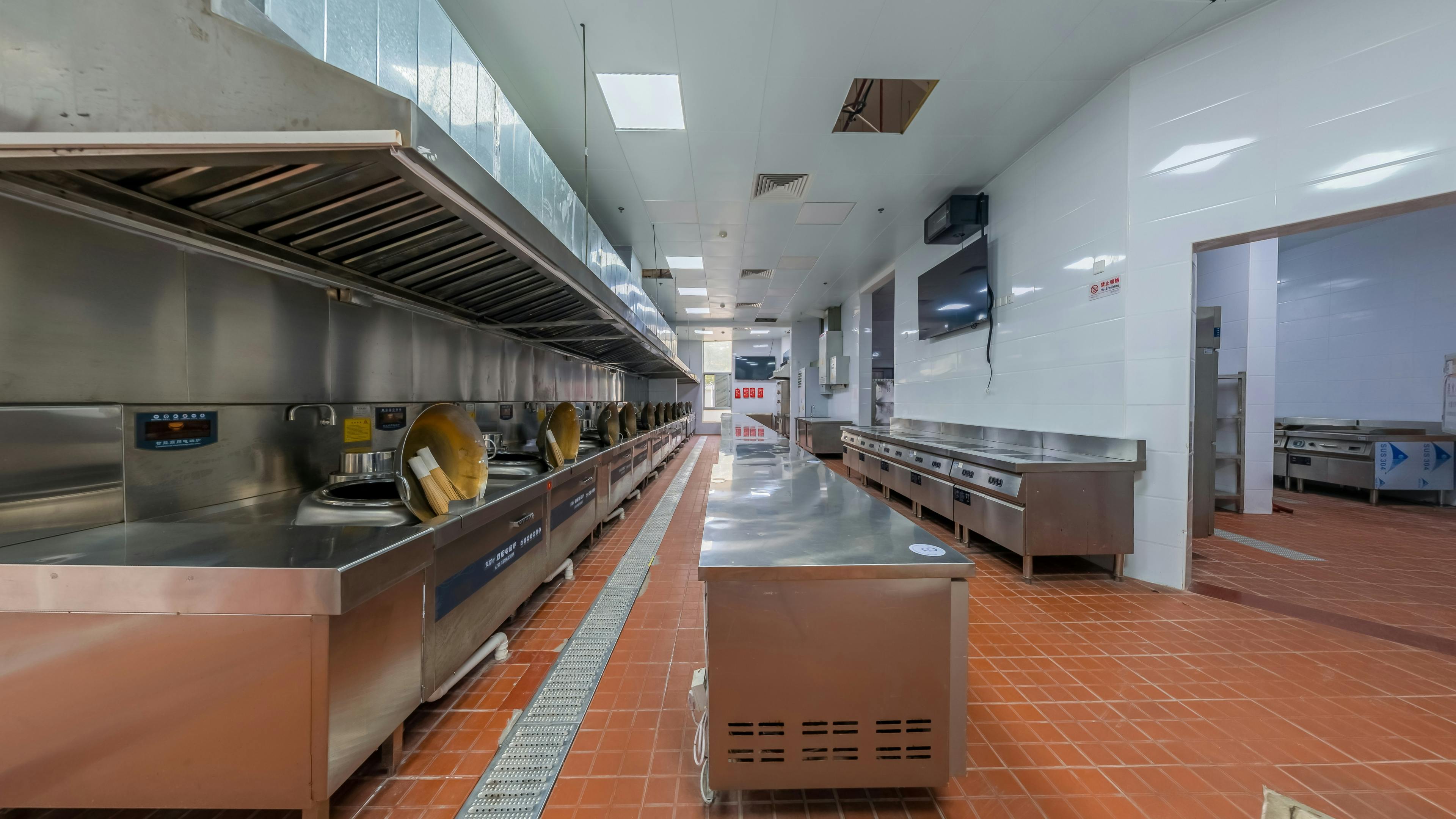
What Does Commercial Kitchen Design Include?
A professional commercial kitchen design covers more than just placing equipment on a floor plan. It defines the five operational zones — receiving, storage, preparation, cooking, and wash-up — and ensures that food flows through them in a single direction, from raw to cooked, without cross-contamination. This HACCP-compliant flow is not optional: Kenya's county food business licensing inspectors specifically assess kitchen layout for flow compliance.
Design deliverables from Beyond Commercial Kitchens include: a scaled layout drawing showing all equipment positions and clearances; a full equipment schedule with specifications (dimensions, power or gas requirements, capacity); extraction canopy sizing matched to the cooking suite; drainage and waste provision mapped to NEMA requirements; and utility connection points (gas, water, power, drainage) marked for the building contractor.
For larger projects — hotels, hospitals, schools — we also provide phased equipment schedules for procurement in stages, and can attend site meetings with architects, mechanical engineers, and project managers.
The BCK Kitchen Design Process
Step 1 — Brief and site survey: We begin with a detailed brief covering your menu type, daily covers or meal numbers, service model (à la carte, buffet, institutional feeding), and staffing levels. For Nairobi projects, we carry out a free on-site survey to take measurements and photograph existing services. For upcountry projects, we work from architectural drawings or coordinate measurements through your local contractor.
Step 2 — Layout concept: We produce an initial layout concept showing the five kitchen zones, primary equipment positions, and service flow. This is reviewed with you before any detailed specification work begins.
Step 3 — Equipment schedule and specification: Once the layout is approved, we produce the full equipment schedule with product-level specifications — dimensions, material grade, capacity, utilities required. Every item is specified from our fabrication range or sourced from vetted suppliers where required.
Step 4 — Fabrication and delivery: Approved designs move directly into our fabrication workshop. Standard items are typically ready in 1–2 weeks; fully bespoke fabrication in 2–4 weeks depending on complexity and volume.
Step 5 — Installation and commissioning: Our installation team delivers, positions, and commissions all equipment. Gas connections are made by a certified gas engineer; electrical connections by a licensed contractor. We carry out a final operational check before handover.
HACCP Compliance in Kitchen Design
HACCP (Hazard Analysis and Critical Control Points) is the international food safety management framework required by Kenya's food business regulations. In kitchen design, HACCP compliance means the physical layout must prevent cross-contamination between raw and cooked food, provide adequate handwashing points at key control points, and allow all surfaces to be cleaned and sanitised effectively.
Common HACCP design failures seen in Kenya include: wash-up sinks placed in the middle of the food preparation area (dirty dishes crossing the prep zone); no dedicated hand-washing sink separate from food prep sinks; preparation surfaces with unsealed joints that harbour bacteria; and inadequate drainage causing standing water. All of these are flagged by county health inspectors and can result in a food business licence refusal or suspension.
Beyond Commercial Kitchens designs every kitchen with HACCP flow as a non-negotiable requirement — not an optional add-on. Our fabrication standards (seamless welds, coved corners, sealed drainage) are specified to support HACCP-compliant cleaning regimes.
Kitchen Design for Different Sectors in Kenya
Restaurant kitchens in Kenya typically prioritise speed and output consistency. Design focuses on a compact hot kitchen zone, efficient prep workflow, and fast wash-up cycle times. Most Nairobi restaurants operate in constrained footprints, so space optimisation and vertical storage are key design priorities.
Hotel kitchens require multi-zone designs covering main kitchen, pastry section, staff canteen, banqueting prep, and servery areas. International hotel brands operating in Kenya require equipment designs that meet brand-standard specifications and can be signed off by the brand's technical services team. We have delivered hotel kitchen projects meeting international brand standards.
Hospital and school kitchens are designed for high-volume daily output — feeding 200 to 2,000+ people per day on a fixed schedule. Design priorities are large-capacity cooking equipment, efficient bulk prep stations, and systematic wash-up lines that keep pace with the meal service volume.
How Much Does Kitchen Design Cost in Kenya?
For projects where Beyond Commercial Kitchens is both designing and fabricating the equipment, kitchen design is included at no additional charge as part of the project scope. We absorb design cost into the fabrication and installation contract.
For design-only commissions — where a client needs a layout drawing and equipment schedule for a separately tendered fabrication — design fees are agreed per project based on scope and complexity. Contact us to discuss your specific project.